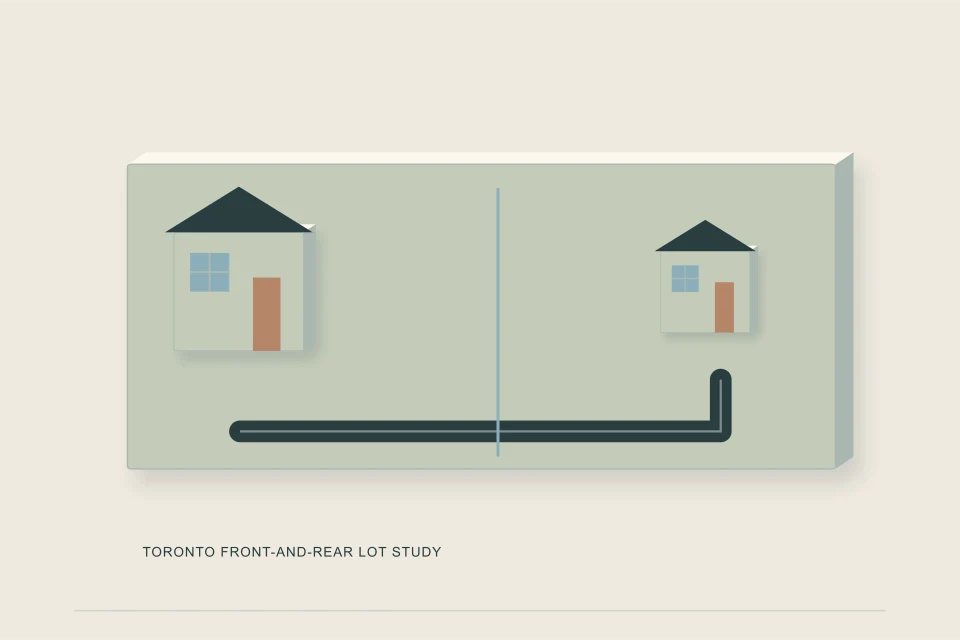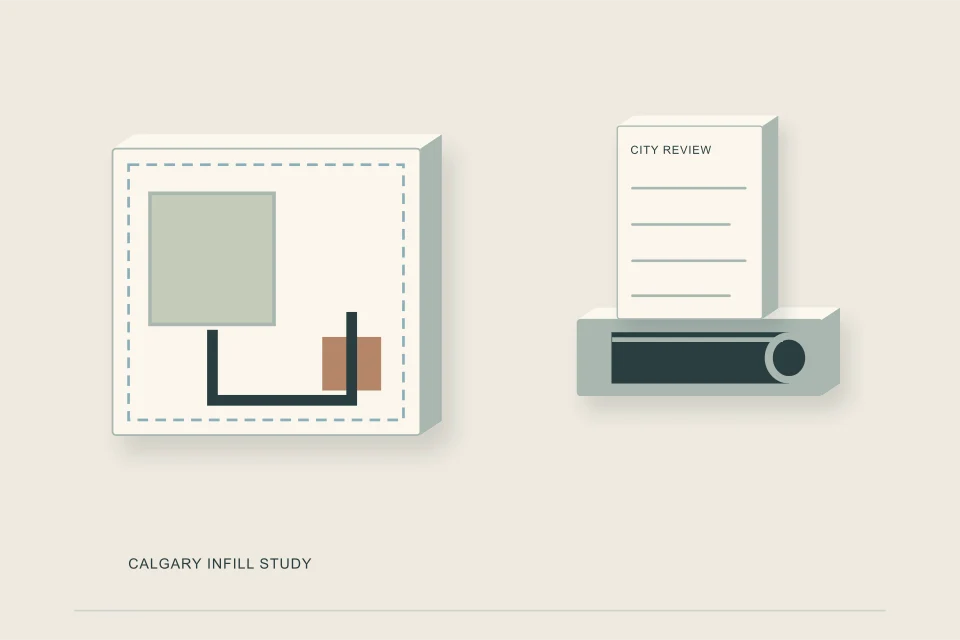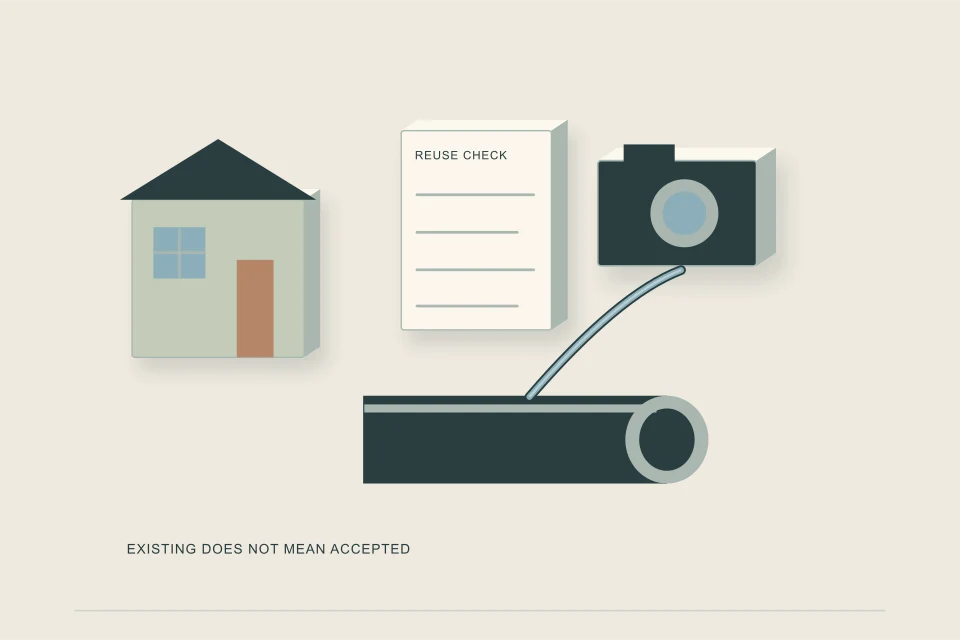
Sometimes, but the city decides, and the bar is higher than "it still drains". On a demolish-and-rebuild, Calgary's guidelines call for new services; Toronto and Vancouver accept reuse only for PVC in good condition shown on video; Halifax requires replacement of services 30 years or older. Everywhere, expect to prove material, size, condition and location before an old service is allowed to serve a new building.
- Reuse is a city approval, not a contractor's opinion; ask before the budget assumes it.
- Most cities that allow reuse want recorded camera video, and some name the inspection standard or charge a reuse inspection fee.
- Material is a common gate: PVC passes in Toronto and Vancouver; clay, fibre and old cast iron rarely do.
- Age can be a gate on its own: Halifax Water replaces services 30 years or older on redevelopment.
- Services that are not reused must be abandoned the way the city specifies, often at the main, and that costs money too.
01 /Why is reuse the first question on a rebuild?
Because it is the largest swing in the servicing budget and the one most often assumed wrongly. A reused service avoids a new tap, a trench across the public right-of-way and, in some cities, a connection fee of many thousands of dollars. A rejected service adds a new connection plus the cost of abandoning the old one. The decision belongs to the city, and cities make it on evidence the plumbing code does not ask for: age, material, video and whether the service fits the new building.
02 /What do cities say about reusing a service?
| City | Published rule |
|---|---|
| Calgary | On a demolished and replaced house, the site servicing design guidelines call for a new water service (at least 25 mm) and new sanitary and storm services. Reuse is considered only for additions or extra buildings, with Water Resources approval based on camera inspection or maintenance records, and must happen within one year. If one pipe in a shared trench fails, all pipes in that trench are replaced. |
| Toronto | Reuse only for construction of a new residential home, with City inspection. The sewer must be PVC or better, not a double connection, with no history of backups and free of defects, and a CCTV inspection is required. Sewer reuse inspection fee $735.81 in 2026. |
| Vancouver | The City Engineer may approve reuse only if the connection is adequately sized, not combined, PVC (or concrete above 375 mm) and in good condition, with video and a report from a PACP- or LACP-certified contractor. The reuse fee is the full connection fee if never paid, or 20 percent if previously paid. |
| Halifax | A service 30 years old or older must be replaced at the owner's cost when the property is redeveloped or the permit value exceeds $100,000. Reuse otherwise needs known land use and building size, a size and material that meet current specifications, and Halifax Water's acceptance; a wastewater lateral needs CCTV. |
| Edmonton | Existing services must be exposed at the property line to confirm location, elevation and condition. Lead water services cannot be reused; unused sewer services are cut and capped at the property line; services EPCOR has marked abandoned cannot be used. |
| Winnipeg | After demolition, services must be reused or abandoned within 18 months. A reused service must meet the City's criteria for material, depth, size, location and function along its whole length. A water service that has frozen, or is at risk of freezing, cannot be reused. |
| Saskatoon | Reusing an existing main stop is not permitted, and services are cut off by a licensed contractor on demolition. No published age or material rule for sewer reuse was found. |
| Ottawa | Reuse rules were not confirmed from City sources; ask at the mandatory service consultation. |
03 /What does a reuse inspection involve?
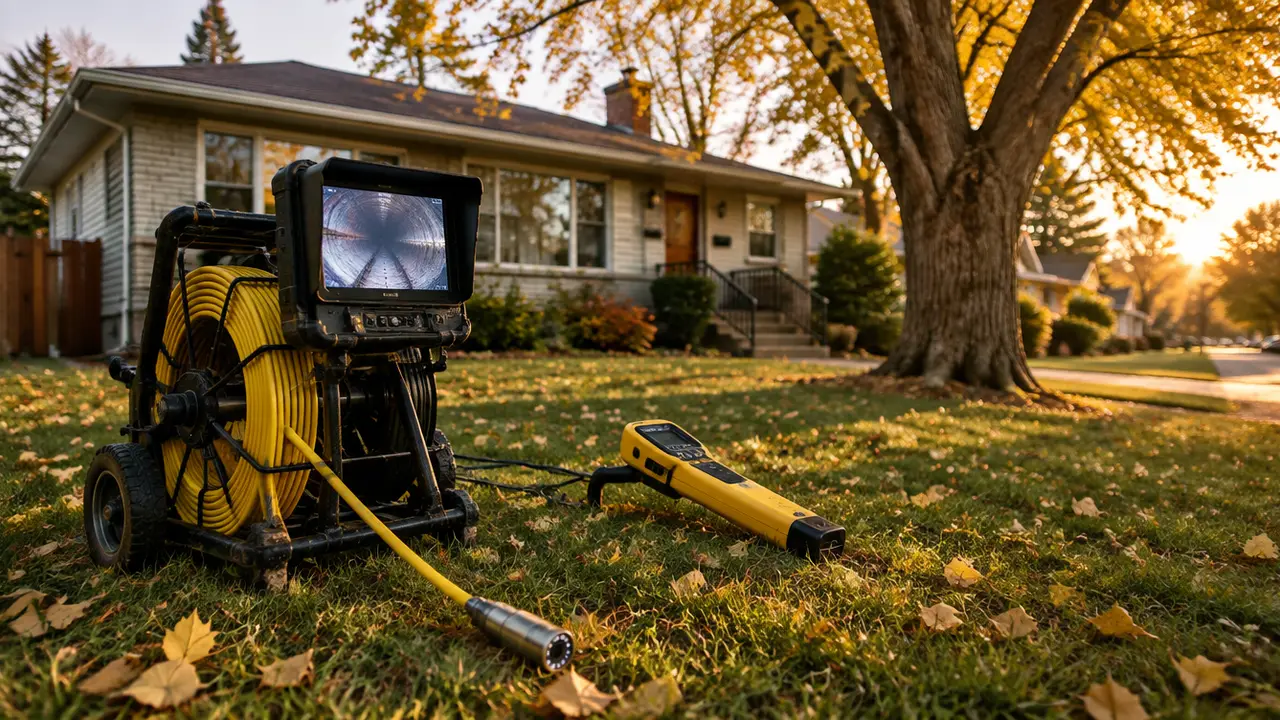
A recorded camera run of the whole service, from the building end to the main, with distances, and a written report. Vancouver specifies that the video and report come from a contractor certified in NASSCO's Pipeline or Lateral Assessment and Certification Programs (PACP or LACP), which standardize how defects are coded. Toronto and Halifax require CCTV. The inspector is looking for the same things a buyer's sewer scope looks for, judged more strictly.
- Material along the whole length, including any change at the property line.
- Joints: offsets, separations and root intrusion.
- Structure: cracks, fractures, deformation, holes, collapse.
- Grade: sags or bellies holding water.
- Connections: whether anything else, such as a neighbour's line or an old foundation drain, joins it; Toronto rules out double connections.
- Size: the actual bore, confirmed against the records.
The network's planning range for a residential camera inspection is $250 to $600, and a crawler camera for longer or larger lines runs higher. The inspection guide covers what a complete record contains.
04 /Is a big enough, sound service always reusable?
No, for four reasons that have nothing to do with the pipe's condition. The city's rule may simply require new services on a rebuild, as Calgary's does. The service may be combined, carrying storm and sanitary together, which Vancouver will not reuse. It may be in the wrong place: the new foundation might sit over it, or its depth at the property line might be too shallow for the new basement to drain by gravity. And the building may now need services the old lot never had, such as a storm connection for three or more units in Saskatoon or a set of services per side-by-side unit in Edmonton.
Size is the one test you can run before anyone films the pipe. Count the new building's fixtures in the fixture load estimator and compare the total with the existing size and slope. If it fails on paper, the camera run will not save it.
05 /What happens to a service that is not reused?
It is abandoned the way the city specifies, and that has its own cost and timing. Toronto charges $1,816.50 to disconnect a sanitary connection and $1,739.74 for a water service of 25 mm or less in 2026. Winnipeg holds refundable deposits of $5,380 each for sewer and water service abandonment, will not issue a demolition permit until services are abandoned or a deposit is paid, and will not allow a new service until the existing ones are abandoned. Saskatoon holds $3,000 for a residential cut-off on demolition. Calgary's specification calls for removing at least 1 m of pipe and plugging the main stop when a water service is abandoned, and requires a disconnection deposit before site servicing plan approval.
- Before demolition
Ask how existing services are to be handled, and whether the city holds a deposit or charges a fee.
- Film and locate
If reuse is possible, record the camera run before demolition disturbs the building end.
- Decide
Submit the video and the new building's load; get the city's answer in writing.
- Abandon or reconnect
Either abandon the service to the city's standard or protect it through demolition for reconnection.
06 /How should the reuse question change your plan?
Budget for a new service unless the city has said yes in writing. Where the city charges a large published fee for new connections, as Toronto and Vancouver do, a successful reuse can save a great deal, so the camera run and inspection fee are worth paying early. Where your own contractor builds the connection, compare the reuse inspection and any repairs with the cost of new pipe, which is often similar once the trench is open anyway.
The Service Connection Planner prints your city's reuse rule beside a planning range for the private side. When you have the city's answer, request quotes for either a reconnection or a new service.
FAQQuestions people ask
Can I reuse the existing sewer line when building a new house?
Only if your city allows it and the pipe passes its tests. Calgary calls for new services on a rebuild; Toronto and Vancouver accept PVC in good condition on video; Halifax requires replacing services 30 years or older.
What does the city need to approve reusing a sewer service?
Usually a recorded camera inspection of the whole service, confirmation of its material and size, and evidence it suits the new building. Vancouver requires a PACP- or LACP-certified contractor's video and report.
Can an old clay sewer service be reused for an infill house?
Rarely. Toronto requires PVC or better and Vancouver requires PVC (or concrete over 375 mm). Clay services are usually replaced on redevelopment.
How much does a sewer reuse inspection cost?
Toronto charges $735.81 for a sewer reuse inspection in 2026, plus the cost of the camera work. Residential camera inspections typically run $250 to $600 as a 2026 planning estimate.
What happens to the old sewer service if it is not reused?
It is abandoned to the city's standard, often with a fee or deposit: Toronto charges $1,816.50 for a sanitary disconnection, and Winnipeg holds a $5,380 deposit for each service.
NETWORKGo deeper across the HAUSE Sewer network
Can a drain snake damage your pipes? Where the real risks are
Can a drain snake damage pipes? How cables and cutters harm old clay, Orangeburg, cast iron, plastic traps, chrome fittings and toilets, and how to avoid it.
PipeCleaning.caWhat pipe do I have? Identify your drain pipe material
What pipe do I have? Identify a drain pipe from its look, joints, markings and house age, with a confidence rating, safe cleaning methods and camera advice.
SewerQuotes.comSewer camera inspection cost, and what the fee should include
Sewer camera inspection cost in Canada for 2026: standalone, pre-purchase and add-on scope prices in CAD, what a proper report includes and when the fee is wasted.
SOURCESSources and further reading
- City of Toronto — Water and sewer service connection re-use
- City of Vancouver — Sewer and Watercourse By-law No. 8093
- Halifax Regional Water Commission — Schedule of Rates, Rules and Regulations (January 1, 2026)
- City of Calgary — Design Guidelines for Development Site Servicing Plans
- City of Winnipeg — Sewer By-law No. 106/2018