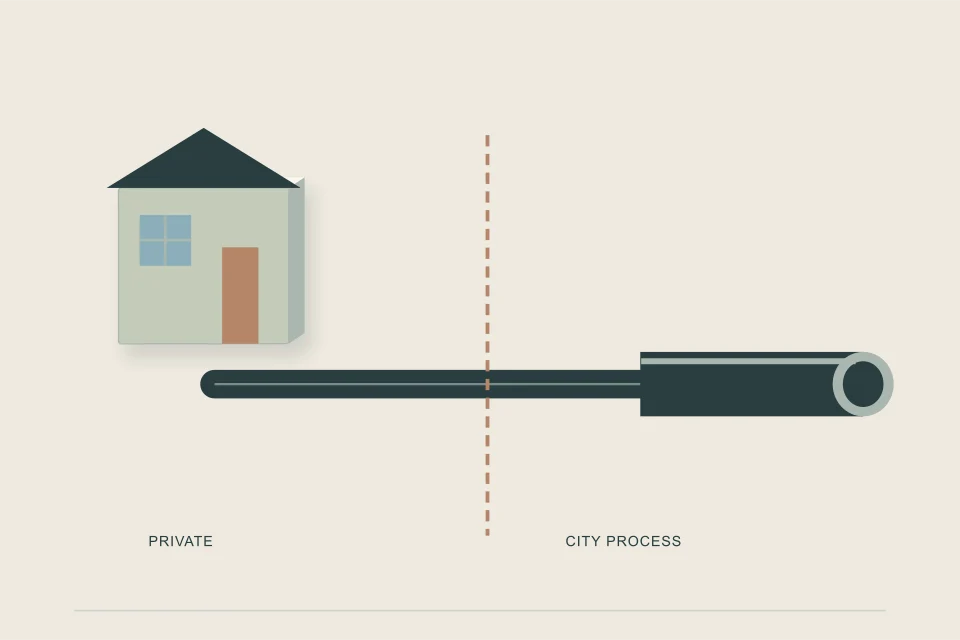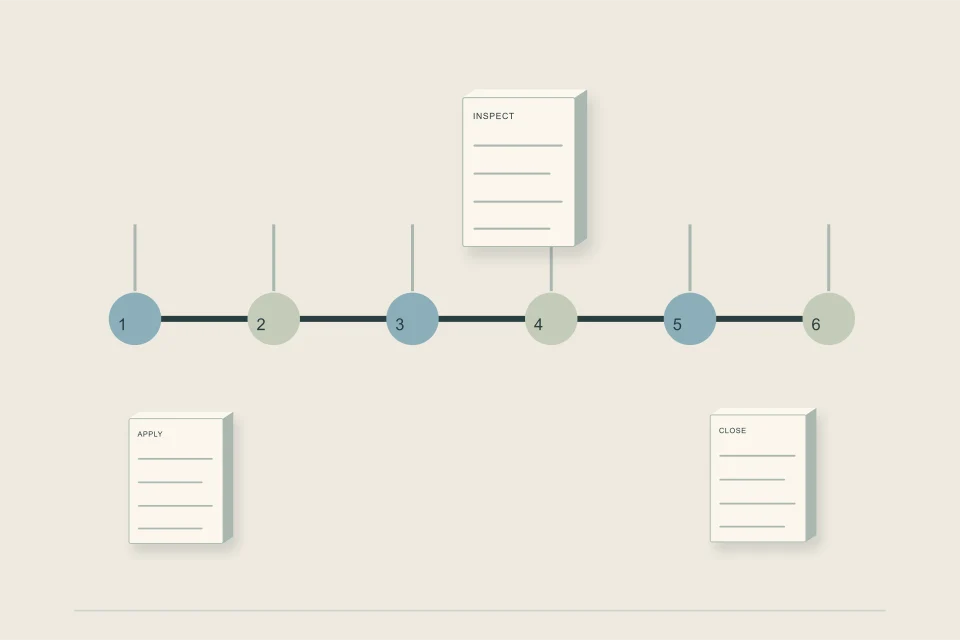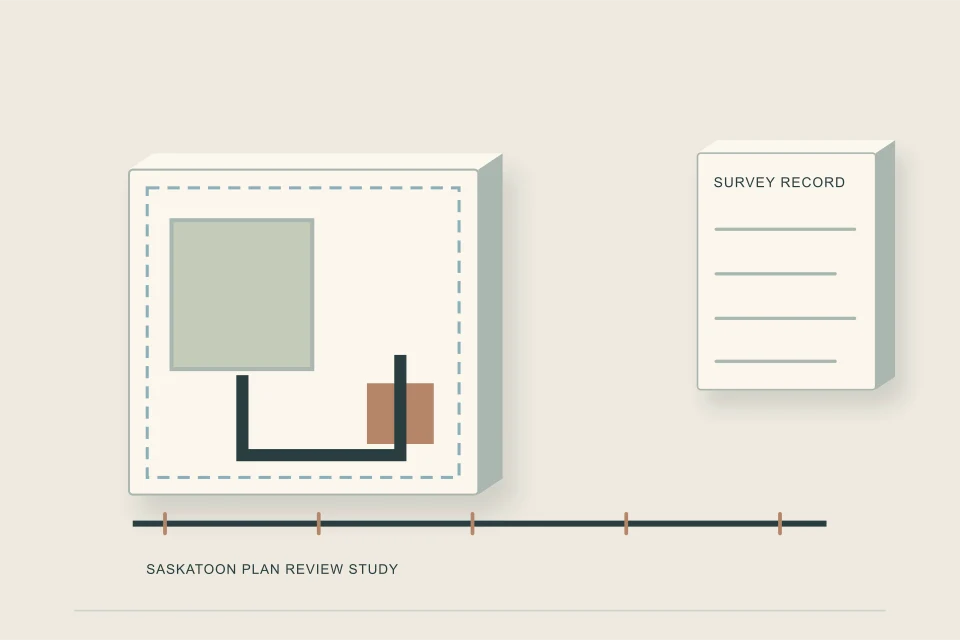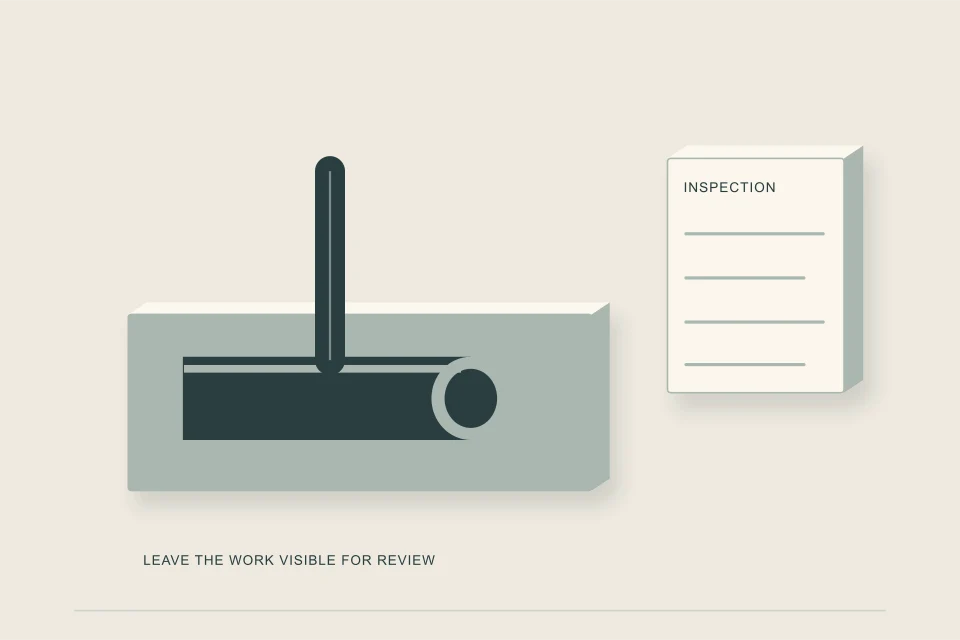
A new sewer service is inspected open, before it is buried: the tap, the pipe, bedding, slope and joints, and usually a test. The city inspects the public side under its own rules and the plumbing inspector the private side under the plumbing permit. Some cities add camera video or record drawings. Keep the as-built, test results and video; they answer every question the service will raise later.
- Everything is inspected before backfill; several cities can make you uncover work that was buried first.
- The public and private sides are usually inspected by different people under different permits.
- Code tests prove new drainage piping is tight before it is covered; camera video proves grade and joints.
- Record drawings, service cards and video are part of acceptance in several cities, not an optional extra.
- Book inspections in advance: Calgary asks for 48 hours, Saskatoon 6 days for right-of-way work.
01 /Who inspects a new sewer connection?
Usually two parties, one on each side of the property line. The city or utility inspects the connection to its system and the pipe in the public right-of-way, under its connection permit or agreement. The plumbing inspector inspects the private building sewer and drains under the plumbing permit. On some projects an engineer also inspects and certifies the work.
| City | What the sources say |
|---|---|
| Calgary | The City inspects public connections under its Master Indemnification Agreement; book water utility inspections at least 48 hours ahead; all water and stormwater infrastructure inspected before backfill; sanitary and storm plumbing inspections are generated at the pre-backfill stage. |
| Saskatoon | Work inspected before backfilling, or the City can make the contractor dig it up at the contractor's cost; an inspector on site before a contractor makes its own tap; $185 per hour, 2-hour minimum per connection, records drafting included. |
| Halifax | All water, wastewater and storm connections, including renewals, inspected before activation; $175 per visit. |
| Winnipeg | No backfilling until the City authorizes it; record drawings may be required within 90 days of completion. |
| Edmonton | EPCOR present while sewer mains are built; private water lines of 40 mm or more flushed and disinfected with stamped bacteriological results before the meter goes in. |
| Ottawa | Backwater valves inspected at underground rough-in and at final (2010 bulletin). |
| Vancouver | Plumbing, subsoil drain and building sewer inspection fee $586; the City connects after the sump inspection passes and pipes are capped. |
02 /What does the inspector look at?
The things that cannot be seen once the trench is filled. An inspector at an open sewer trench typically checks:
- The connection: the right fitting at the main or junction, pointing downstream, made to the city's standard.
- Pipe and joints: the approved material, fully home, no damaged bells or unsupported joints.
- Bedding: continuous, firm support under the pipe, with no rocks or point bearing, and the specified material around it.
- Grade: a steady fall at or above the minimum, with no bellies.
- Depth and cover: enough cover for frost and loads at the property line and along the run.
- Cleanouts: in the right places and accessible.
- Backflow protection: backwater valves where required, arranged for the number of dwelling units.
- Separation: sanitary and storm not cross-connected; clean water not sent to the sanitary.
03 /What tests prove a new sewer is sound?
The plumbing code sets tests for new drainage piping before it is covered, and inspectors choose among them. Under Subsection 2.3.6, drainage pipes must withstand a water pressure test (a column of at least 3 m on all joints for 15 minutes) and an air pressure test (35 kPa held for at least 15 minutes, following the pipe maker's instructions), and must be capable of meeting a ball test, in which a hard ball dense enough not to float is rolled through the pipe when the inspector asks. The detailed procedures, and how installers prepare for them, are covered on sister site SewerInstall.com, which focuses on the installation craft.
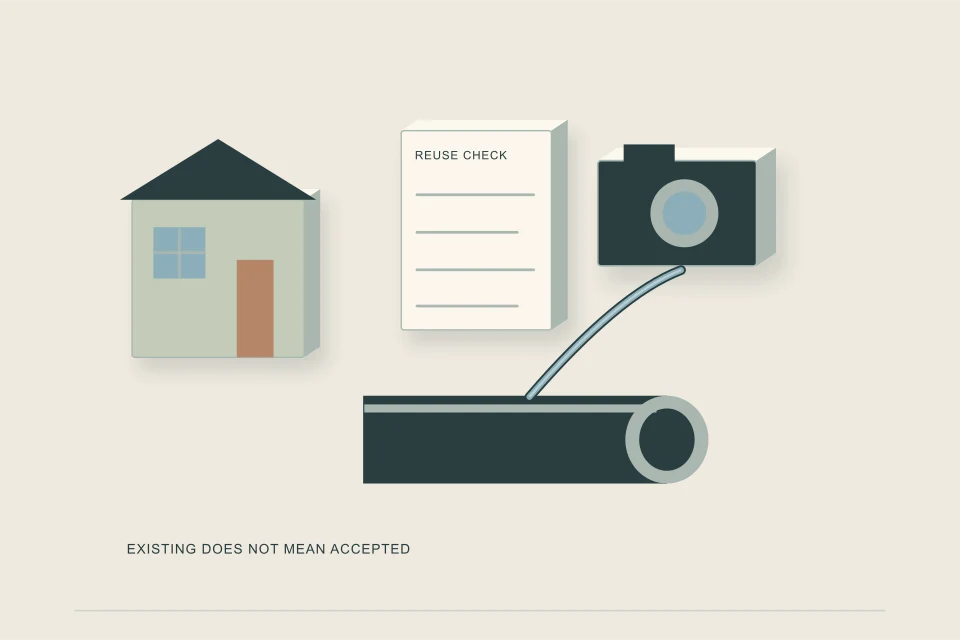
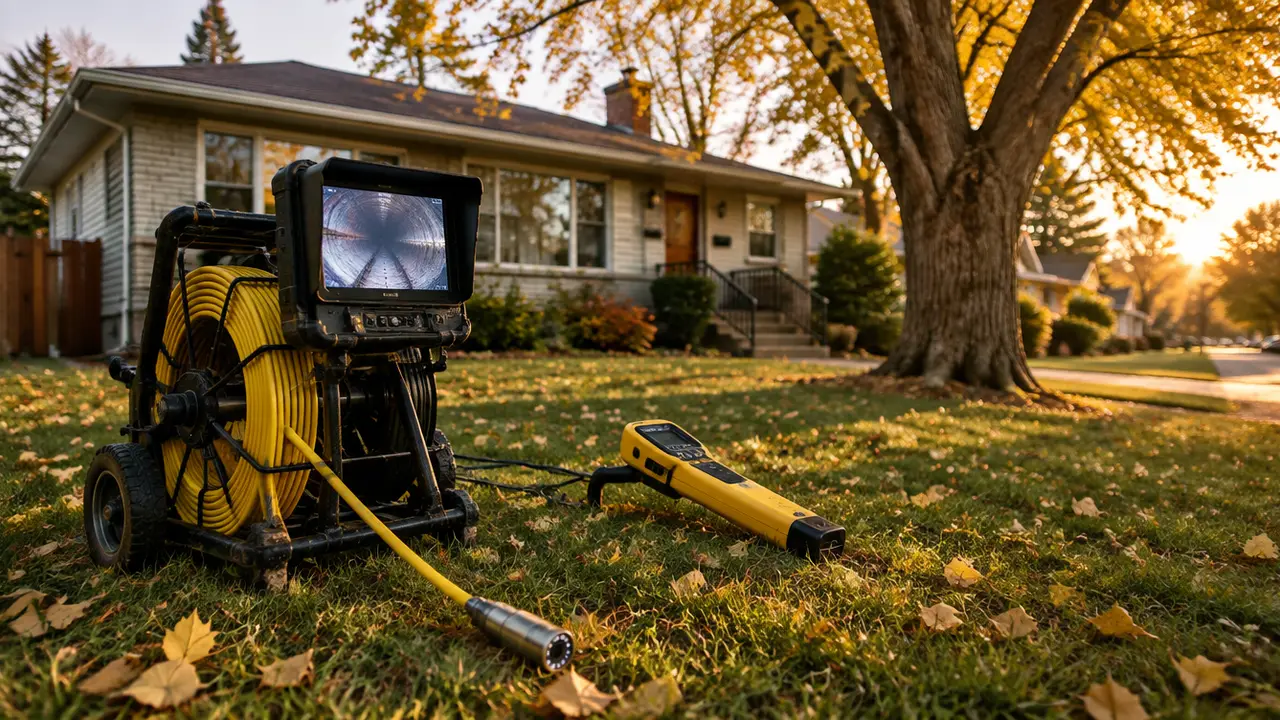
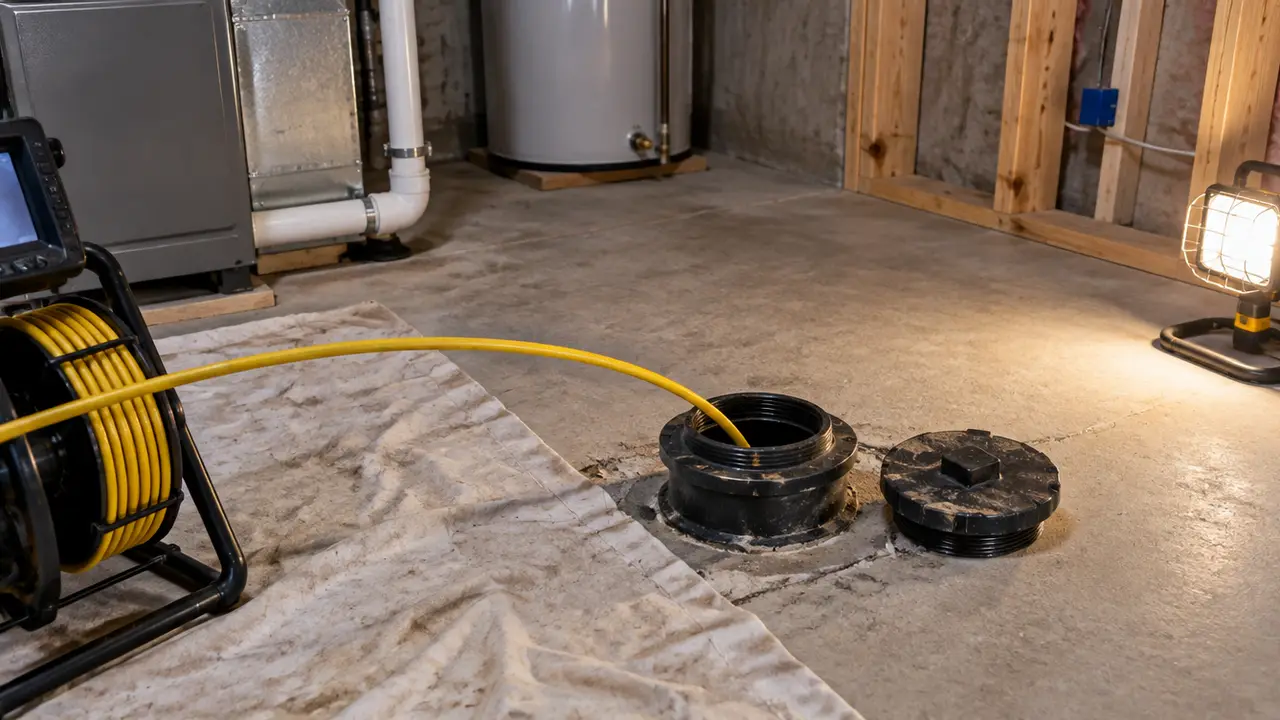
A recorded camera run is not one of the code tests, but it is the best evidence of grade and joints, and some cities require one in specific cases: Toronto and Halifax for reusing an existing lateral, Vancouver from a PACP- or LACP-certified contractor for reuse, and Halifax Water for mains on system extensions. For a new service, ask for a recorded run after installation anyway; it costs little beside the work and becomes the baseline for the life of the pipe.
04 /What records should a new connection leave behind?
A complete record set, filed with the city where it asks and kept by the owner in any case. Winnipeg can require record drawings within 90 days of completion, Saskatoon requires connection records for final acceptance, and Halifax Water requires service connection cards for each lot on system extensions.
- As-built drawing
The route, sizes, materials, inverts at the building and property line, cleanout positions and the tie-in point, measured from fixed features.
- Service or tie card
The city's record of the connection: size, material, location and depth. Ask for a copy.
- Test results
Which test, the date, and the inspector's sign-off.
- Camera video
The file itself with footage distances, not just a summary.
- Permits and approvals
The connection permit, plumbing permit and final inspection records.
These records are what a future buyer, lender, insurer or contractor will ask for, and what lets a future repair be dug in the right place. The tie-in basics guide explains how cities use service cards to find existing connections.
05 /How should inspections be sequenced on an infill job?
In the order the trench is opened and closed, with each inspection booked before the work it covers starts. On a typical infill rebuild with a new sanitary service, the sequence runs from the building outward and then from the main inward, and the two meet at the property line.
- Underground rough-in inside the footprint
The building drain, any backwater valves and sump connections, seen before the slab is poured. Ottawa's bulletin names the underground rough-in as one of the two backwater valve inspections.
- Private building sewer
From the wall to the property line, with bedding, grade, cleanouts and the test, seen before backfill under the plumbing permit.
- Public side
The tap, the public segment and the joint at the property line, seen by the city or utility before backfill, often on a separate booking.
- Water and storm
Inspected alongside, where they share the trench. Calgary inspects all water and stormwater infrastructure before backfill.
- Final
After fixtures are installed, the plumbing final, and the records the city asks for.
Where the city builds the public side itself, as in Vancouver and Toronto, the private side is inspected and capped at the property line first and the city connects afterwards; Vancouver schedules the connection after the sump inspection passes. Where your contractor builds both sides, the two inspections can happen the same day if both inspectors are booked, which shortens the time the trench stays open in the street.
06 /What goes wrong at inspection, and how do you avoid it?
- Backfilled too early. The most expensive mistake. Book the inspection before the trench is dug and protect the date.
- Wrong material or fitting. Check the city's standard for the public side; it may differ from what the plumbing code permits privately.
- Grade short of the minimum. Usually a design problem: the tie-in was shallower than assumed. Confirm the invert before laying.
- One backwater valve for two units. A normally open valve in a building drain may serve only one dwelling unit under NPC 2.4.6.4.(5).
- Missing cleanout. Especially at the property line where the city standard calls for one.
- Storm cross-connection. Roof leaders or a foundation drain tied to the sanitary where the city forbids it.
A contractor who works regularly in your city will know that city's inspector's expectations. When you request quotes, ask each one which inspections their price includes and who books them, and use the Service Connection Planner to see your city's published inspection rules.
FAQQuestions people ask
Who inspects a sewer tie-in to the city main?
The city or utility inspects the public connection and pipe in the right-of-way; the plumbing inspector inspects the private building sewer under the plumbing permit.
Does a new sewer service need a camera inspection?
The plumbing code does not require one for new pipe, but some cities require video for reuse of an existing lateral, and a recorded run of the new service is the best record of grade and joints.
How much is a sewer connection inspection fee?
As published and checked in September 2026: Saskatoon $185 per hour with a 2-hour minimum, Halifax Water $175 per visit, Vancouver $586 for plumbing, subsoil drain and building sewer inspection.
What is on an as-built drawing for a sewer service?
The route, pipe sizes and materials, invert depths at the building and property line, cleanout positions and the tie-in point, measured from fixed features.
Can I backfill the sewer trench before the inspector comes?
No. Saskatoon can make the contractor dig it up at their cost, and Winnipeg forbids backfilling until the City authorizes it.
NETWORKGo deeper across the HAUSE Sewer network
Sewer scope on a new build: what goes wrong in brand-new sewer lines
Is a sewer line inspection necessary for new construction? What goes wrong in new laterals, when to scope before warranty dates, and what to ask the builder.
SewerQuotes.comSewer permits, inspections and who pays: owner or city?
Sewer line permits and who pays in Canada: the usual owner vs city split, permit and inspection costs, road cuts, city tree roots and what to confirm.
SewerCleaners.caHow to prevent sewer backup in your basement: a layered plan
How to prevent sewer backup in a basement: keep your lateral clear, maintain a backwater valve, disconnect downspouts, manage weeping tile, plan for storms.