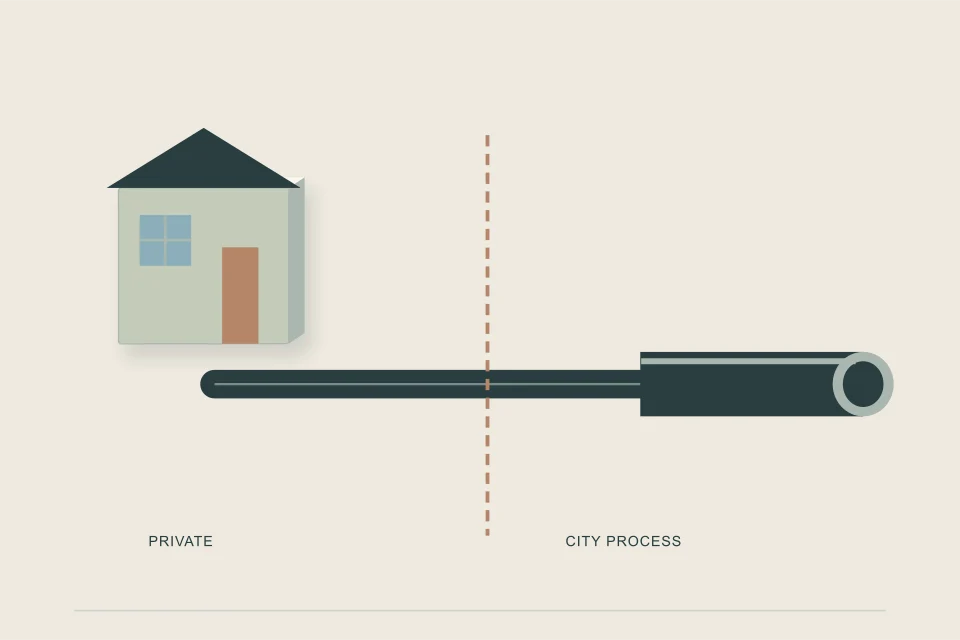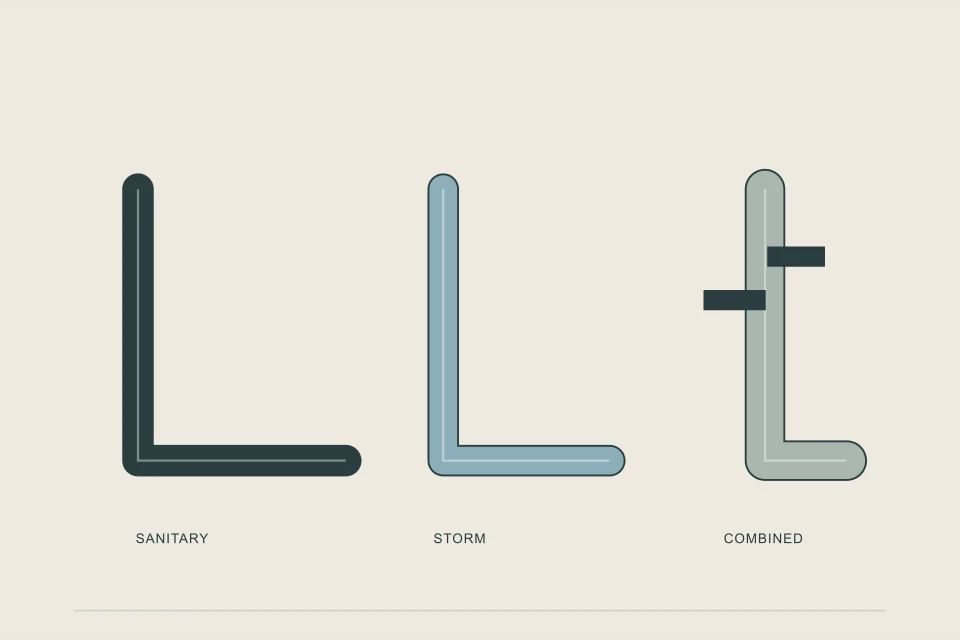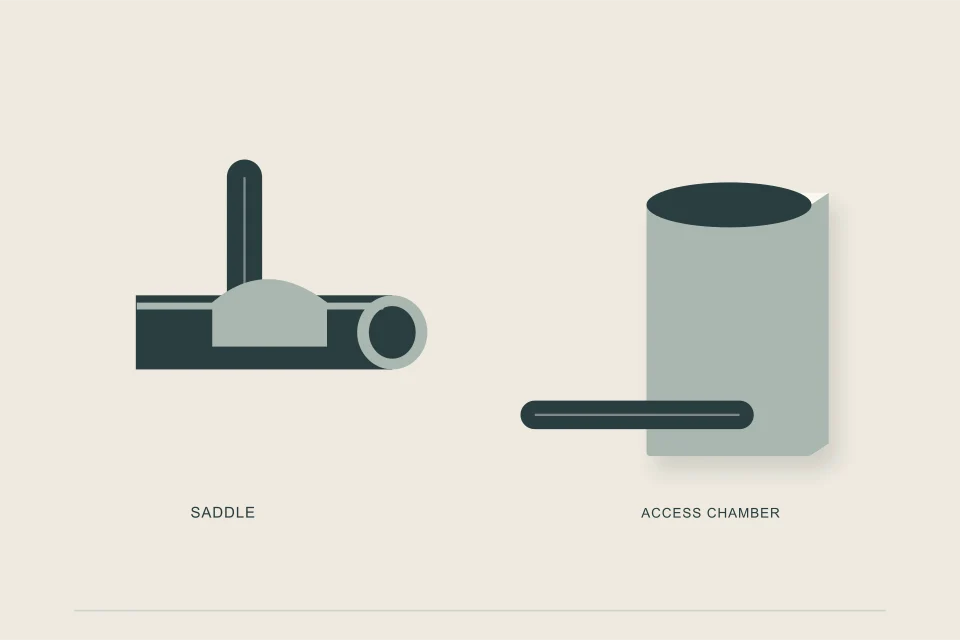
You do not tie into a city sewer main yourself. The tap is made by the city, its contractor or a contractor the city has approved or licensed, using the method the municipal standard sets: a fitting in a new main, a saddle over a cored hole in an existing main, or a manhole connection for larger services. Your part is to plan the tie-in point and depth, apply, and have the private side ready.
- Every city checked restricts who may work on its sewer system; an owner cannot simply dig and connect.
- The municipal standard, not the contractor, chooses the connection method and fittings.
- Existing mains are usually tapped with a cored hole and a saddle; new mains get a wye or tee set as they are laid.
- Manhole connections are common for larger services and follow the utility's design standard.
- Joining a new branch to an existing private sewer is a different job, with its own code limits.
01 /Can you tie into a city sewer main yourself?
No. The public sewer belongs to the city or its utility, and every city checked in September 2026 names who may work on it. In Calgary, only a City-approved indemnified contractor may make connections to the public system or alter it. In Edmonton, only EPCOR crews and authorized contractors may install service lines on public land. In Winnipeg, only the City or the holder of a Sewer Contractor's Licence may work on a private sewer service pipe or the City system. In Saskatoon, a licensed water and sewer contractor builds the connection and the City taps the main or has an inspector present. In Toronto and Vancouver, the City's own contractors or crews build the public side.
What an owner or builder does control is the planning: where the service meets the main, at what depth, what size, and when the private side is ready. The permit guide covers the application.
02 /What are the ways a service is connected to a main?
Four methods cover most residential and small multi-unit work. Which one your service gets is set by the municipal standard for the main's material, size and depth and the service size.
| Method | How it works | Typical use |
|---|---|---|
| Wye or tee in a new main | A branch fitting is set into the main as it is laid, with a stub capped for the future service | New subdivisions and main replacements |
| Saddle tap on an existing main | A hole is cored in the live main and a saddle fitting is clamped, strapped or bonded over it, with the service joined to the saddle | Infill connections to an existing main |
| Manhole connection | The service enters a manhole through a cored and sealed opening, often with a drop where levels differ | Larger or multi-unit services, or where the standard requires it |
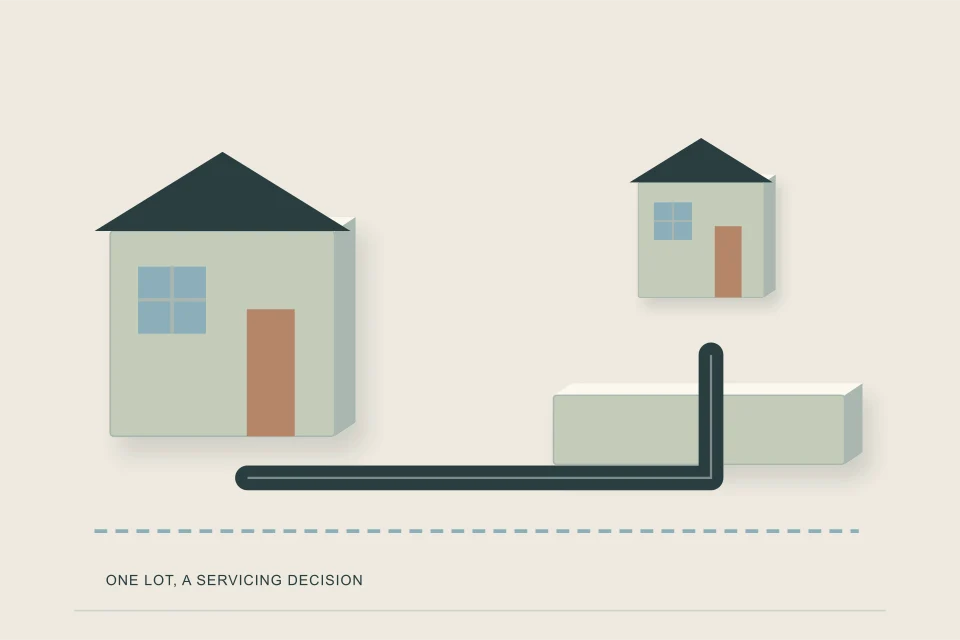
| Into another building sewer | A wye on an existing private building sewer, with a cleanout | An ancillary building on the same lot, where the code and city allow |
03 /What is a live tap?
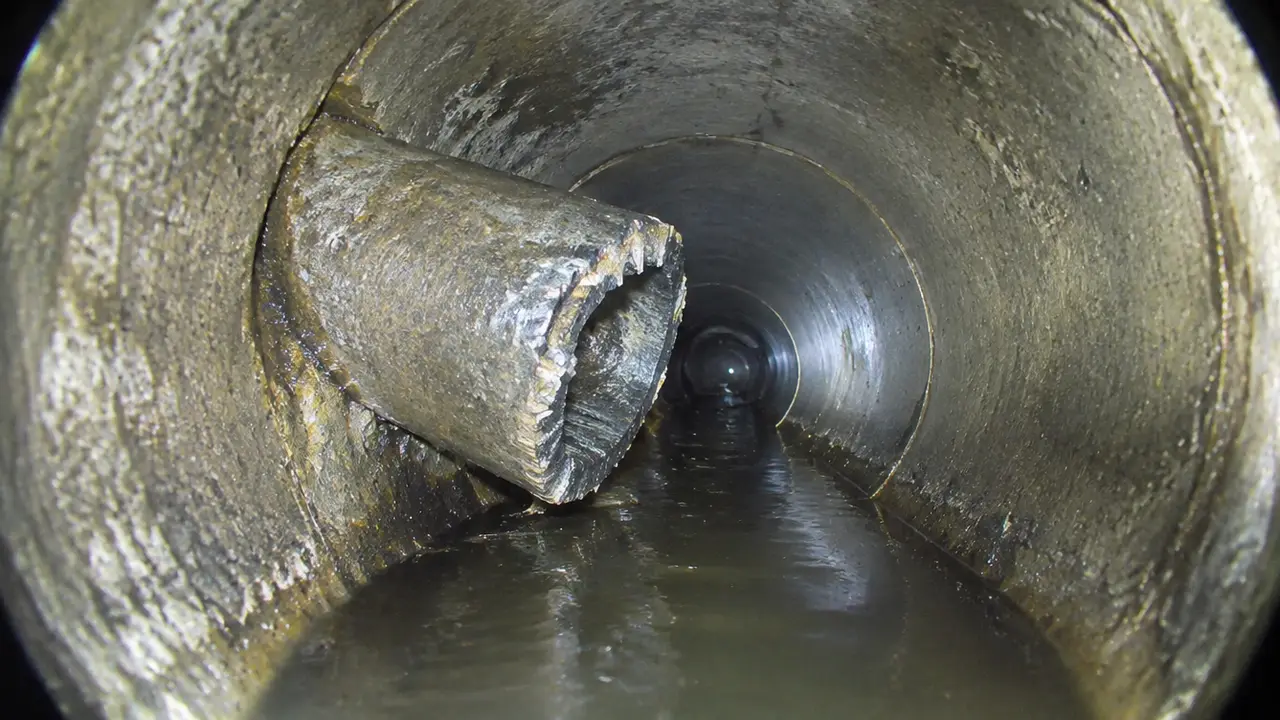
A connection made to a main that stays in service while the hole is cut. Sewers cannot be shut off like a water main, so almost every infill connection to an existing sewer main is, in effect, a live tap: flow continues past the work while the core is drilled and the saddle fitted. The crew controls the flow of debris from the core, keeps the coupon (the cut disc of pipe) out of the main, and seals the saddle to the main's outer wall to the standard's requirements.
Cities control live taps closely. Saskatoon lets licensed contractors live-tap their own 25 mm water connections only with a City inspector on site, and otherwise taps the main itself, charging $415 per tap for connections up to 50 mm as checked in September 2026. Halifax Water makes the tap on new services, at $375 for 19 to 50 mm connections. Water taps and sewer taps follow different procedures, but the principle is the same: the utility makes or witnesses the joint on its own pipe.
04 /How is a new service tied into a clay or older main?
With the fittings the utility's standard names for that main material. Older neighbourhoods still have vitrified clay, concrete and other mains, and each takes a different saddle or coupling. Where a new PVC service meets an older clay pipe, the joint is usually made with a flexible coupling with stainless steel bands, designed to join pipes of different outside diameters; where the new service meets the main, the utility specifies the saddle. If the main is too fragile to tap, the utility may replace a section or require a manhole connection instead.
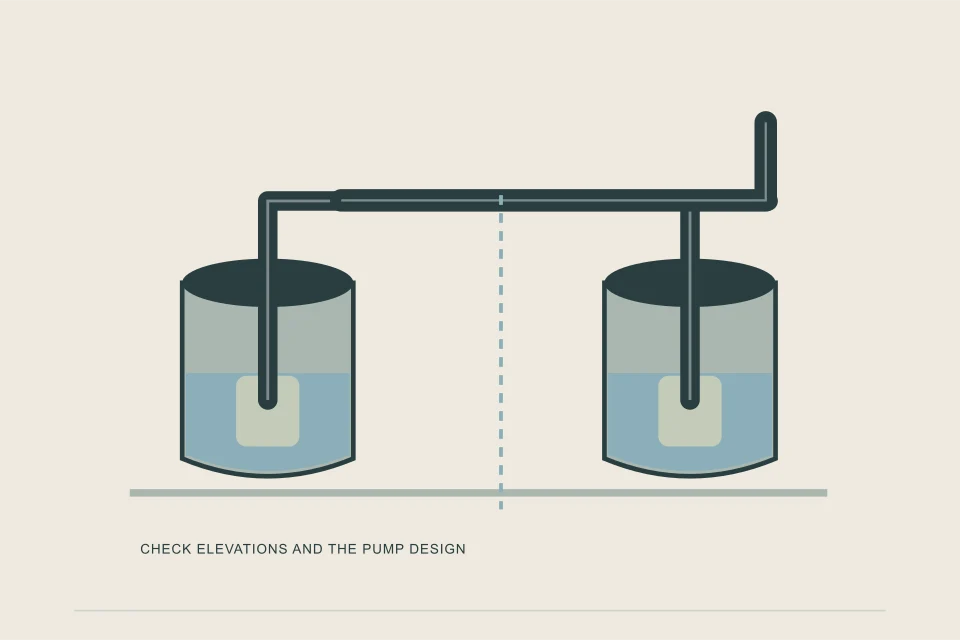
This is also where the invert matters most. An older main may be shallower than current standards, which limits how deep the new building's drain can be. Confirm the main's depth and material from records, or by exposing it, before the building design is final; the pumped services guide explains what happens when the main is too shallow.
05 /How is a new branch tied into an existing building sewer?
With a wye fitting pointing downstream and a cleanout, on the private side, under a plumbing permit. This is the tie-in for a garden suite, laneway house or coach house sharing the main house's service, and it is allowed because Article 2.1.2.4 of the National Plumbing Code lets an ancillary building on the same property share the service. Two code limits apply: the developed length between the suite and the building sewer it joins, other than at a manhole, may not exceed 30 m (Sentence 2.4.7.2.(4)), and the shared pipe downstream must carry both buildings' combined load.
The craft of making that joint, including cleanout placement and the fall on the new branch, is covered on sister site SewerInstall.com. This site covers when such a tie-in is allowed and what the city will ask; the laneway and garden suite guide goes city by city.
06 /What does the city need from you before the tap?
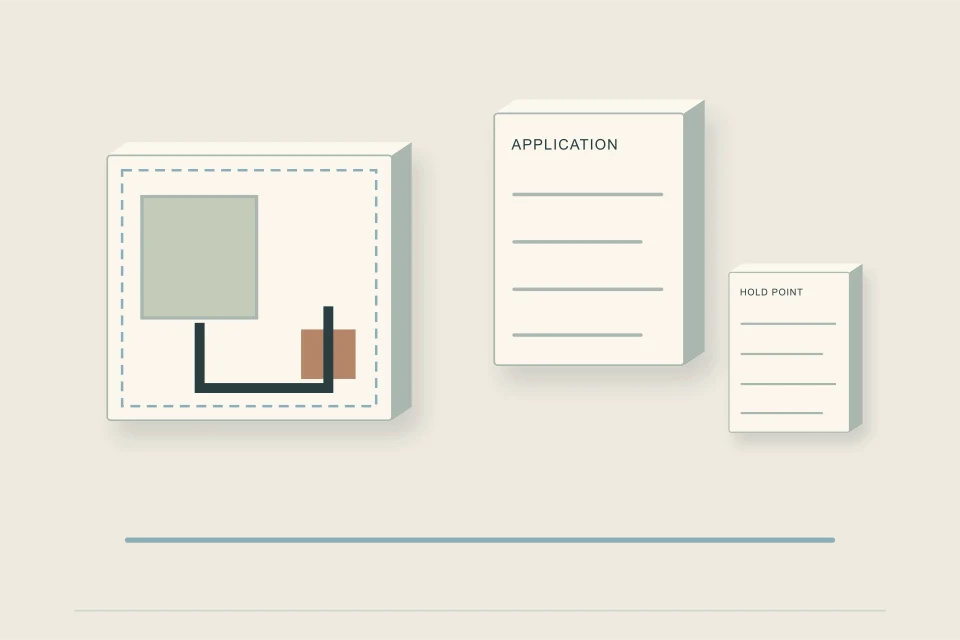
A design it can check and a private side it can meet. The tap is the last piece of a chain, and the city will not make or approve it until the chain is in place. Across the cities checked, the common requirements are these:
- An approved connection application or permit, with fees paid; Toronto has you pay the estimated cost in advance.
- A servicing plan showing the tie-in point, the pipe size, slope and inverts, and the route to the building.
- The tie-in depth confirmed. EPCOR requires existing services to be exposed at the property line to check location, elevation and condition.
- Locates for other utilities along the route and at the main.
- A right-of-way or street-use permit where your contractor works in the road or sidewalk, as Saskatoon requires with its Use of Right-of-Way Permit.
- The old service dealt with. Winnipeg will not allow a new service until the existing ones are abandoned; Calgary requires a disconnection deposit before servicing plan approval.
Getting these in order is the owner's and designer's job, and it is where most of the calendar goes. The timeline guide sets the published waits side by side.
07 /What happens on the day of the tie-in?
- Locates and traffic
Utility locates are current, and any street-use or traffic plan is in place for work in the road or sidewalk.
- Excavation to the main
The main is exposed at the tie-in point, with the trench supported as its depth requires.
- The tap
The authorized party cores the main and fits the saddle, or connects at the manhole, to the standard.
- The public segment
Pipe is laid on bedding at grade to the property line and joined to the private side or capped.
- Inspection before backfill
The city sees the connection, bedding and grade before anything is covered.
- Backfill and restoration
Compacted backfill, then road, sidewalk and boulevard restoration to the city's standard.
Before booking, use the Service Connection Planner to see who makes the tap in your city, and request quotes that state clearly whether the price includes the public side and road restoration.
FAQQuestions people ask
How do you tie into a city sewer line?
Through the city: you apply for a connection, and the city, its contractor or an approved or licensed contractor makes the tap using the method the municipal standard sets. Your contractor builds the private side under a plumbing permit.
Can a homeowner tie into the main sewer line?
Not directly. Every city checked restricts work on the public system to its own crews or approved, authorized or licensed contractors.
What is a saddle tap on a sewer main?
A connection to an existing main made by coring a hole in the pipe and fitting a saddle over it, to which the new service is joined. The utility's standard sets the saddle type and who fits it.
How do you connect PVC sewer pipe to old clay pipe?
Usually with a flexible coupling with stainless steel bands, made to join pipes of different outside diameters. At a public main, the utility specifies the fitting.
Can a new service connect at a sewer manhole?
Sometimes, typically for larger or multi-unit services or where the utility's standard requires it. The opening is cored and sealed, often with a drop where levels differ.
NETWORKGo deeper across the HAUSE Sewer network
Backwater valve installation cost and municipal subsidies
Backwater valve installation cost in Canada for 2026: CAD ranges for unfinished and finished basements, line items, subsidy program patterns and insurance angles.
SewerInspector.caCCTV sewer inspection: crawlers, lateral launch cameras and coded surveys
What CCTV sewer inspection is: crawler cameras, lateral launch and zoom cameras, PACP-coded municipal surveys, and what city camera work means for your lateral.
SewerRoots.caWhose tree, whose pipe: who pays when roots block a sewer line
Who is responsible when a city or neighbour's tree sends roots into your sewer line: the general Canadian pattern, the evidence, and how to raise it.