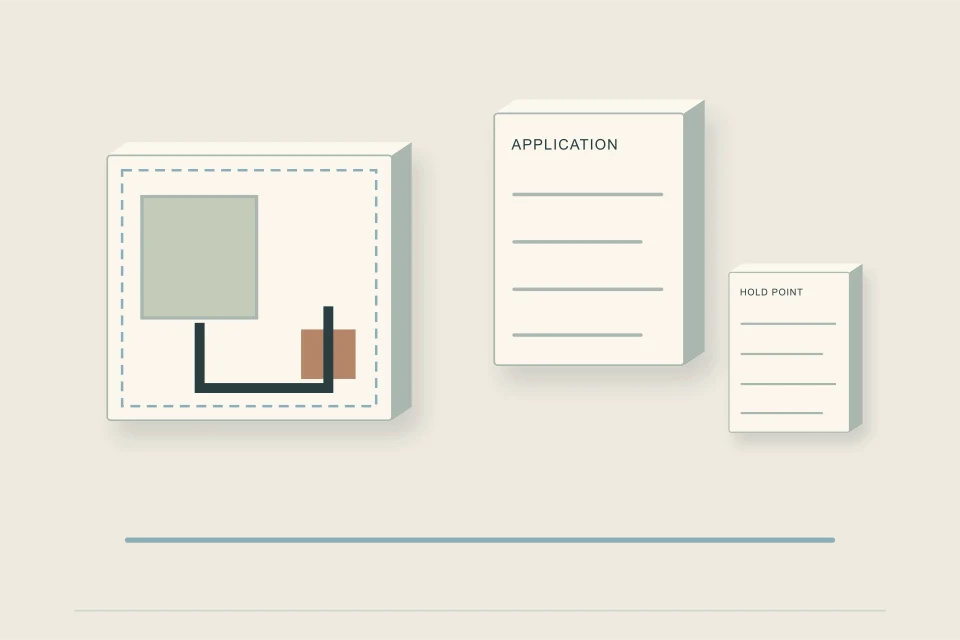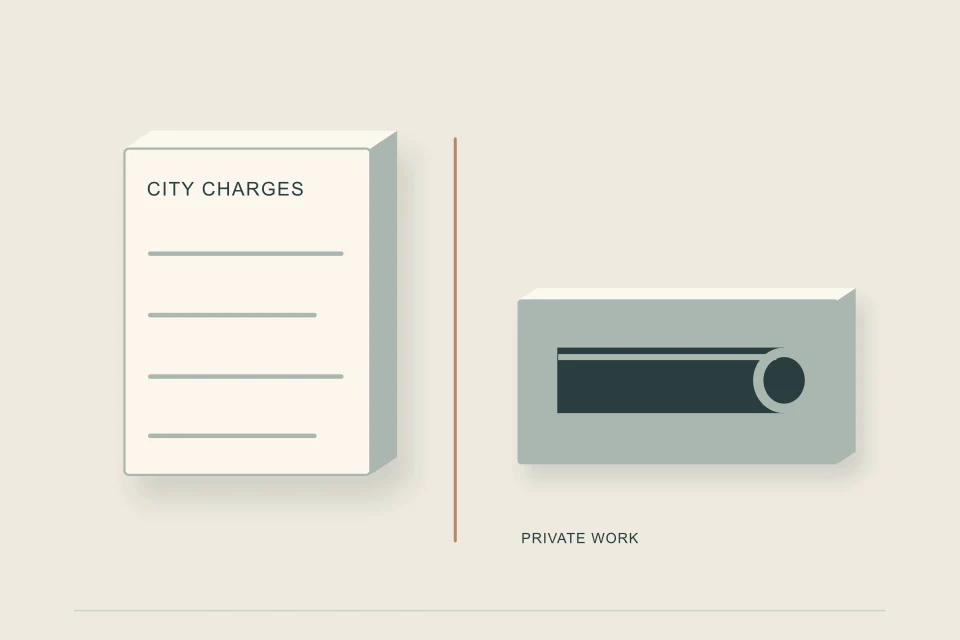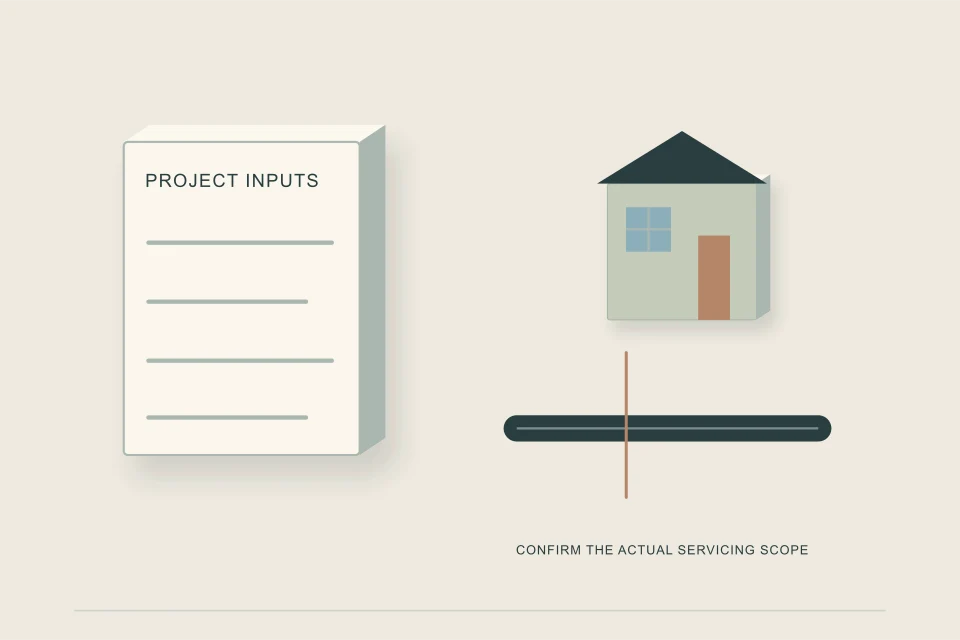
In Toronto, City contractors build the public part of a new sewer service connection and the owner's contractor builds the rest. Properties with up to five units apply online for a 150 mm sewer or 19 or 25 mm water service; the City estimates costs in four to six weeks, takes payment in advance, and lists a 2026 fee of $14,718.78 per new sanitary or storm connection.
- The City of Toronto builds the public-side connection with its own contractors and does not do private-side work (as checked September 2026).
- Up to five units with a 150 mm sewer or 19/25 mm water service go through the online request; anything larger goes through the ICI Municipal Services Application.
- Toronto's 2026 fee schedule lists $14,718.78 for a new sanitary connection and the same for a new storm connection, paid before the work is scheduled.
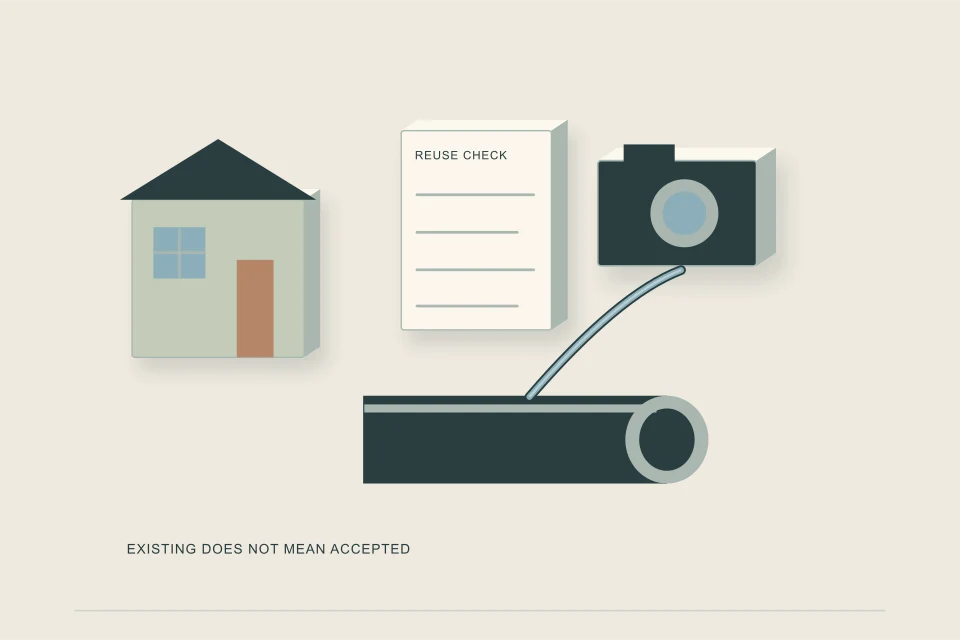
- Reusing an existing sewer connection is limited to a new residential home and needs a CCTV inspection showing PVC or better pipe with no defects.
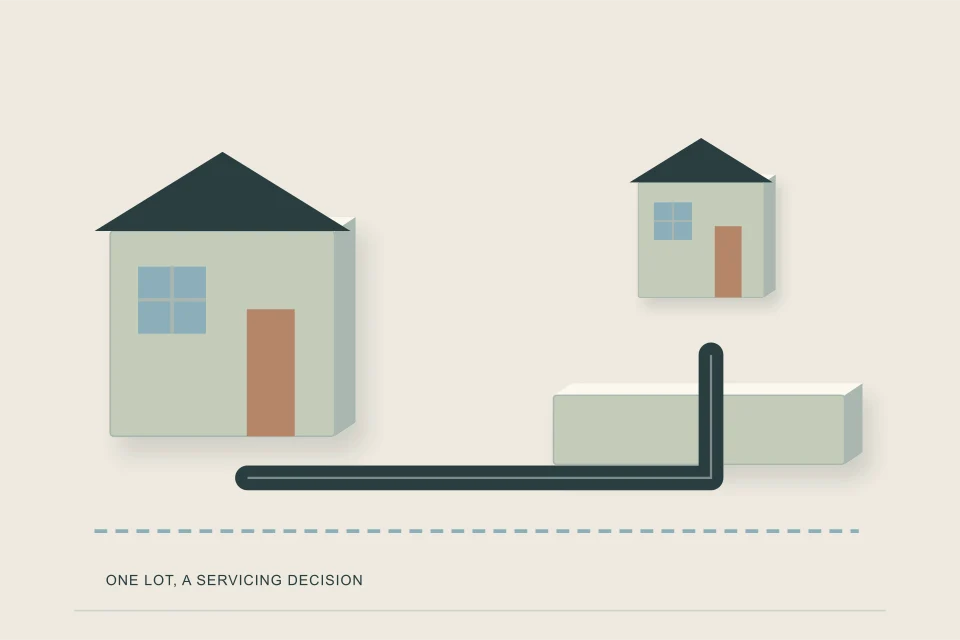
- Garden and laneway suites are intended to take their utilities through the primary dwelling rather than from the street.
01 /Who builds which part of a new sewer service in Toronto?
The City of Toronto builds the public portion, from the sewer main in the road to the property line, using City contractors, and it does not do any private-side work (as checked September 2026). Everything from the property line into the building is the owner's job: the trench, pipe, cleanout, backwater valve and the connection to the building drain, carried out by the owner's plumbing or drain contractor.
Private drain work in Toronto falls under the Ontario Building Code, not the National Plumbing Code directly. Confirm with Toronto Building which permit your private scope needs before you price it, because a new house, a suite conversion and a multi-unit drain are not handled the same way.
02 /How do you apply for a sewer connection in Toronto, by building type?
The route depends on unit count and pipe size. The City's online request covers properties of up to five units that need a 19 mm or 25 mm water service or a 150 mm sewer; bigger services go through the ICI Municipal Services Application (as checked September 2026). The table maps common infill projects to what the City's pages and Municipal Code Chapter 681 say.
| Project | What the source says | What to confirm |
|---|---|---|
| New house or house with a secondary suite | Online connection request if the property has up to five units and needs a 150 mm sewer and 19 or 25 mm water | Whether the existing service qualifies for reuse instead |
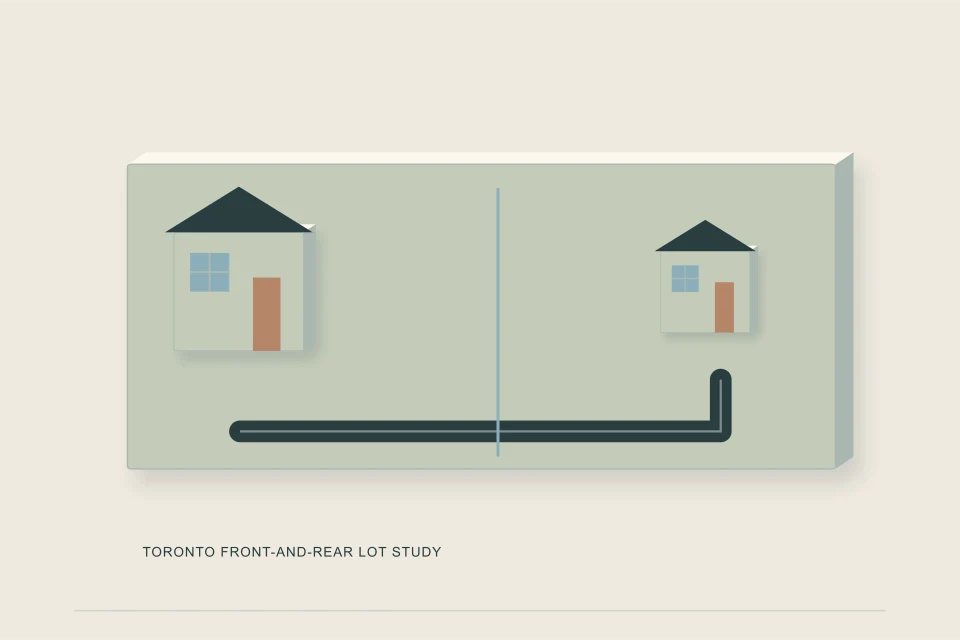
| Garden suite or laneway suite | Utilities are intended to connect from the primary dwelling; the garden suite guide cites Ontario Building Code Division B, Article 7.1.5.4 | Whether the house drain and service have capacity for the added load |
| Semi-detached or severed lots with separate titles | Chapter 681: one connection may not serve more than one property | That each property gets its own sanitary and storm route |
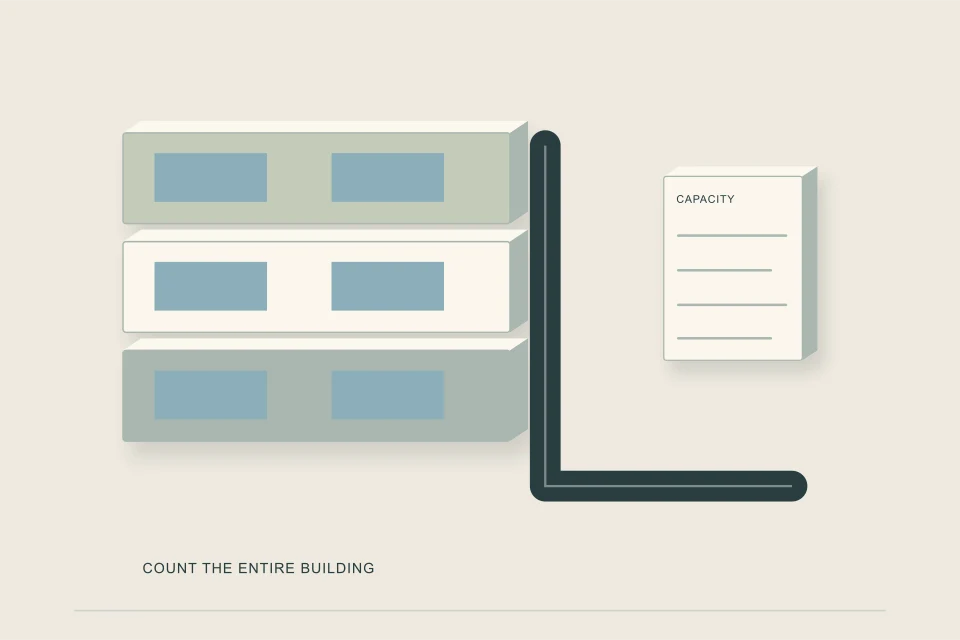
| Multiplex up to five units | Online request if sizes stay at 150 mm sewer and 19/25 mm water | Whether the load pushes the sewer beyond 150 mm |
| Larger multi-unit building | ICI Municipal Services Application | Whether capacity screening applies under the zoning by-law for the site |
Chapter 681 also says one connection may not serve more than one building unless the Building Code allows it, which is why the code reference in the garden suite guide deserves a close read. The same guide sets a fire access route of up to 45 m, at least 1.0 m wide with 2.1 m of clear height, which affects where a suite can sit on the lot. For how shared and separate drains work in general, see laneway and garden suite sewer options.
- Submit the request
Online for up to five units at the standard sizes; otherwise the ICI Municipal Services Application.
- Receive the City cost estimate
The City states four to six weeks to prepare it (as checked September 2026).
- Pay in advance
Work is not scheduled until the estimate is paid.
- Public-side construction
The City gives a target of 12 to 14 weeks; ask when that clock starts for your file.
03 /What does the City of Toronto charge for a new connection in 2026?
Toronto publishes flat 2026 fees for connection work, and a new sanitary connection and a new storm connection each cost $14,718.78 (as checked September 2026). A new house that needs both, plus a 19 mm water service, starts at roughly $35,300 in City fees before any private work.
| Item | What the source says | As checked |
|---|---|---|
| New sanitary connection | $14,718.78 | September 2026 |
| New storm connection | $14,718.78 | September 2026 |
| 19 mm water service with meter | $5,884.44 | September 2026 |
| 25 mm water service with meter | $6,818.29 | September 2026 |
| Sewer reuse inspection | $735.81 | September 2026 |
| Water service reuse | $367.13 | September 2026 |
| Sanitary disconnection | $1,816.50 | September 2026 |
| Water disconnection | $1,739.74 | September 2026 |
On the private side, network planning ranges for 2026 run about $600 to $1,000 per metre of trench and pipe at shallow depth and $1,000 to $2,000 per metre when deep or under hard surfaces, plus $500 to $2,000 for mobilisation and locates, $600 to $2,500 for a cleanout, $800 to $2,500 for a backwater valve in new construction and $500 to $15,000 or more for restoration. The new sewer connection cost guide explains how those add up.
04 /Can you reuse the existing sewer connection when you rebuild in Toronto?
Only for a new residential home, and only if the pipe passes. Toronto's reuse criteria (as checked September 2026) require the existing sewer to be PVC or better, not a double connection, free of any backup history and free of defects, proven by a CCTV inspection. The sewer reuse inspection is $735.81 and water reuse is $367.13, against $14,718.78 for each new sewer connection.
Clay or cast iron services will not meet the PVC-or-better test, so an older teardown should budget for new connections. If you do not reuse a service, the City charges a disconnection fee: $1,816.50 for sanitary and $1,739.74 for water. The general decision logic is in reusing an existing sewer service. For water service replacement and lead programs, the sister site WaterMainReplacement.ca covers that side.
05 /Which stormwater and backwater valve rules shape a Toronto connection?
Toronto keeps clean water out of its sanitary system. Chapter 681 bars uncontaminated water from sanitary and combined sewers, bars downspouts from connecting to any sewer, and says foundation drains on new construction may not drain directly to the sewer; the City also runs a mandatory downspout disconnection program (as checked September 2026). Design the storm connection and site drainage around those limits.
- Normally closed backwater valves are prohibited in the building drain or building sewer, according to the City backwater valve guide.
- Multi-unit buildings need a drain permit to install a backwater valve; the guide lists a $38.67 fee (as checked September 2026).
- Depth and cover for the private sewer are not on the City pages checked for this guide; confirm required cover and invert with Toronto Building and the connection estimate.
- Capacity screening for sewers and watermains applies only where specific by-laws require it, so ask whether your site is one of them.
06 /What should you ask the City of Toronto before you design?
- Does my project fit the online request (up to five units, 150 mm sewer, 19 or 25 mm water), or the ICI Municipal Services Application?
- Does my existing sewer qualify for reuse, and when can the CCTV reuse inspection be booked?
- For a garden or laneway suite, what does the reviewer need to see to accept servicing through the main house?
- Is my site subject to sewer and watermain capacity screening under its zoning by-law?
- Where does the storm connection go, and where must foundation and roof water discharge?
- When does the 12 to 14 week target start, and what permits the private-side work?
Run your unit count and fixtures through the service connection planner to see which route you are likely on, then request quotes for the private side with the City estimate in hand.
FAQQuestions people ask
How much does a new sanitary sewer service connection cost from the City of Toronto in 2026?
The City's 2026 fee for a new sanitary connection is $14,718.78, and a new storm connection is the same amount (as checked September 2026). Private-side work is extra and is priced by your own contractor.
Can a Toronto garden suite share the main house sewer service connection?
The City's garden suite page says utilities are intended to connect from the primary dwelling, and the suite guide cites Ontario Building Code Division B, Article 7.1.5.4. Confirm the house drain can carry the added load before you design.
How long does a new sewer service connection take in Toronto?
The City states four to six weeks to prepare a cost estimate, payment in advance, and a target of 12 to 14 weeks (as checked September 2026). Ask when that target starts for your file.
Does Toronto build the private part of a new sewer service line?
No. City contractors build the public side only; the owner hires a contractor for the private drain.
Which Toronto sewer service connections can be reused for a rebuilt house?
Only for a new residential home, and only where CCTV shows PVC or better pipe, not a double connection, no history of backups and no defects. The reuse inspection fee is $735.81 (as checked September 2026).
When does a Toronto multiplex need the ICI Municipal Services Application for sewer service?
When the project exceeds five units or needs services larger than a 150 mm sewer or a 25 mm water service, according to the City page as checked September 2026.
SOURCESSources and further reading
- City of Toronto — Request a water/sewer service connection or disconnection
- City of Toronto — Water rates and fees
- City of Toronto — Water and sewer service connection re-use
- City of Toronto — Garden suites
- City of Toronto Municipal Code — Chapter 681, Sewers
- City of Toronto — Backwater valve permit guide