In Halifax, the applicant pays for the excavation and pipe from the main to the building on a new sewer service connection, and Halifax Water makes the tap. New buildings apply through an HRM building permit, existing single homes and townhouses upload a New Connection and Renewal Application, and multi-unit projects follow Section 8 of the Design Specifications. Regional development charges apply to net new units.
- Halifax Water's 2026 Regulations make the applicant pay for excavation and pipe from the main to the building, while Halifax Water does the tap (as checked September 2026).
- Published Halifax Water fees include $375 for tapping a 19 to 50 mm service and $175 per inspection visit.
- An existing service at least 30 years old must be replaced at the owner's cost when a redevelopment or a permit over $100,000 is involved.
- The Design Specifications require a separate connection for each building, except an ancillary building on the same property, and CCTV before a wastewater lateral is reused.
- HRM's second unit incentive offers up to $10,000 toward water and sewer connection costs, with applications due by October 11, 2026.
01 /Who does what on a new Halifax sewer connection?
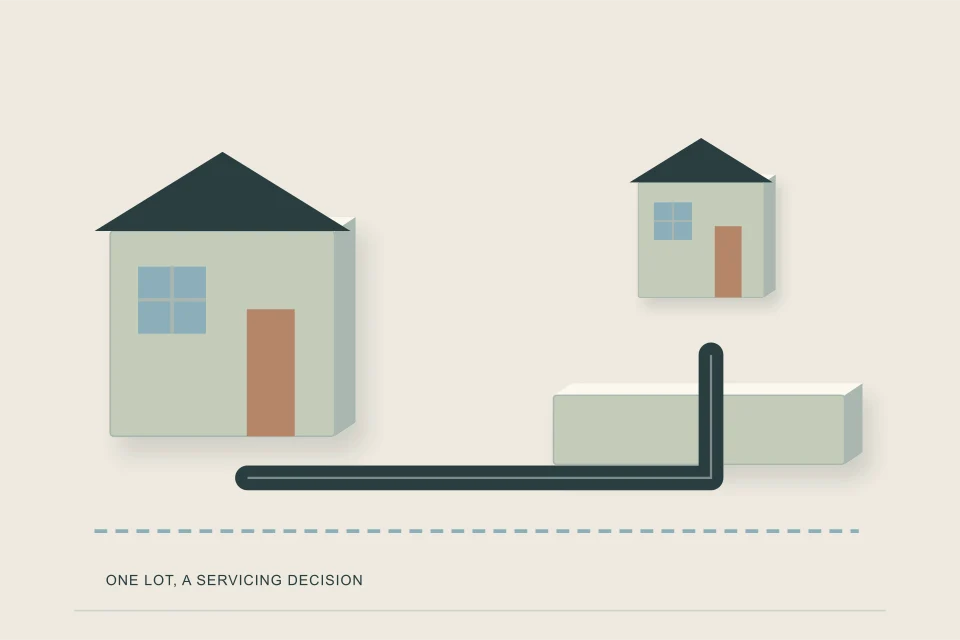
The applicant pays for the excavation, pipe and related work from the main to the building, and Halifax Water makes the tap on its main, under Halifax Water's Regulations effective January 1, 2026 (as checked September 2026). So the owner's contractor digs and lays the service; Halifax Water connects it and inspects.
The Regulations set the utility's charges: $375 to tap a 19 to 50 mm service and $175 per inspection visit. If your project changes the use of a building, Halifax Water may require a sizing determination or a hydraulic analysis before it approves the connection, so raise any change of use early.
02 /Which Halifax Water application route fits your project?
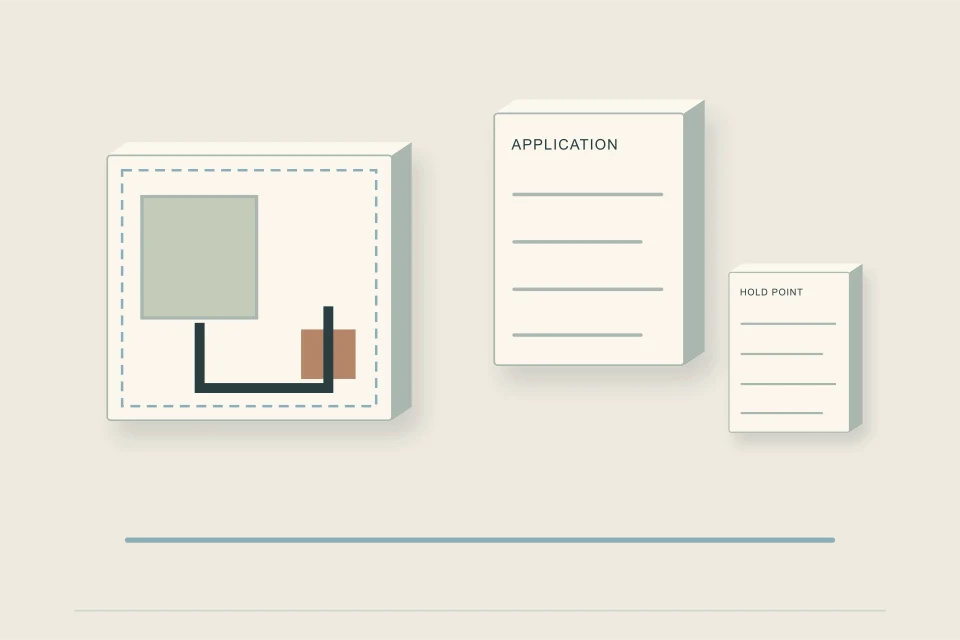
It depends on whether the building is new and how many units it has. New buildings go through an HRM building permit; existing single homes and townhouses upload a New Connection and Renewal Application to Halifax Water; multi-unit projects follow Section 8 of the Design Specifications (as checked September 2026). Halifax Water's page gives five business days for the application route; confirm what that period covers.
| Project | What the source says | What to confirm |
|---|---|---|
| New house | Apply through the HRM building permit | Tap size and inspection bookings |
| Existing single home or townhouse | Upload a New Connection and Renewal Application | Whether the existing service must be replaced |
| Backyard suite | HRM staff report for Case 21162 (2020): backyard suites connect to the main dwelling lateral | Capacity of the existing lateral |
| Separate buildings or titles | Design Specifications: a separate connection per building, except an ancillary building on the same property | Whether each new lot needs its own services |
| Multi-unit building | Section 8 of the Design Specifications | Sizing and any hydraulic analysis |
The one-connection-per-building rule mirrors Article 2.1.2.4 of the National Plumbing Code of Canada, which requires each building to be connected separately but lets an ancillary building on the same property share. Nova Scotia's adopted code edition was not verified for this guide, so confirm the edition in force with HRM. For how a backyard suite ties in, see laneway and garden suite sewer options.
03 /What does a new Halifax connection cost in charges and fees?
Beyond tapping and inspection, the largest public charge is the regional development charge, which for a single home or townhouse is $6,126.84 for wastewater and $1,921.82 for water (as checked September 2026). It applies only to the net increase in units, so a rebuild that replaces one home with one home should not add a charge for that unit.
| Item | What the source says | As checked |
|---|---|---|
| Tapping, 19 to 50 mm service | $375 | September 2026 |
| Inspection | $175 per visit | September 2026 |
| Regional development charge, wastewater, single or townhouse | $6,126.84 | September 2026 |
| Regional development charge, water, single or townhouse | $1,921.82 | September 2026 |
| Regional development charge, multi-unit, per unit | $4,115.04 wastewater; $1,290.77 water | September 2026 |
| Regional development charge, secondary suite | $2,103.71 wastewater; $659.86 water | September 2026 |
Halifax Water says the development charges are frozen, and that its 2026 application to update them is suspended pending an extension of the freeze beyond November 9, 2026. Check the rate on the day you apply. HRM's second unit incentive, funded through the Housing Accelerator Fund, offers up to $10,000 toward water and sewer connection costs for a new suite; applications close October 11, 2026 and work must be complete by April 1, 2027.
For private work, 2026 network planning ranges run $600 to $1,000 per metre of trench and pipe at shallow depth and $1,000 to $2,000 per metre when deep or under pavement, plus $500 to $2,000 for mobilisation and locates and $500 to $15,000 or more for restoration. The new sewer connection cost guide shows how these combine.
04 /When must an old service be replaced instead of reused in Halifax?
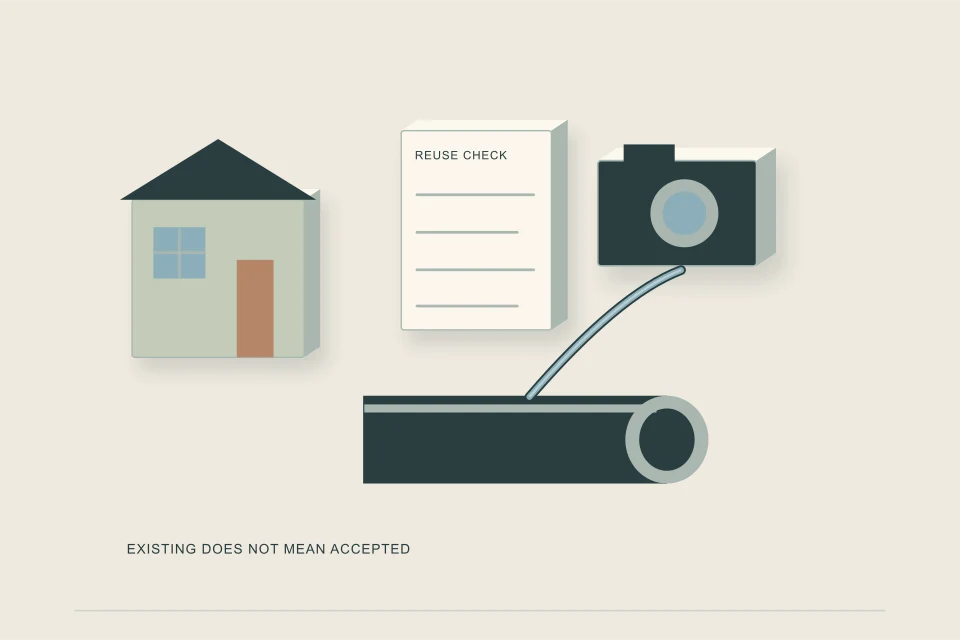
When the service is at least 30 years old and the project is a redevelopment or carries a permit worth more than $100,000, Halifax Water requires replacement at the owner's cost under sections 51(5) and 61(9) of its Regulations (as checked September 2026). Younger services may be reused, but a wastewater lateral needs a CCTV inspection first, according to the Design Specifications.
That rule catches many infill projects, since a new house or a substantial renovation will usually exceed $100,000 and any service laid before about 1996 is already past 30 years. Get the service age from your records or Halifax Water before you budget. Reusing an existing sewer service explains what a camera run should show.
05 /How deep are Halifax services buried?
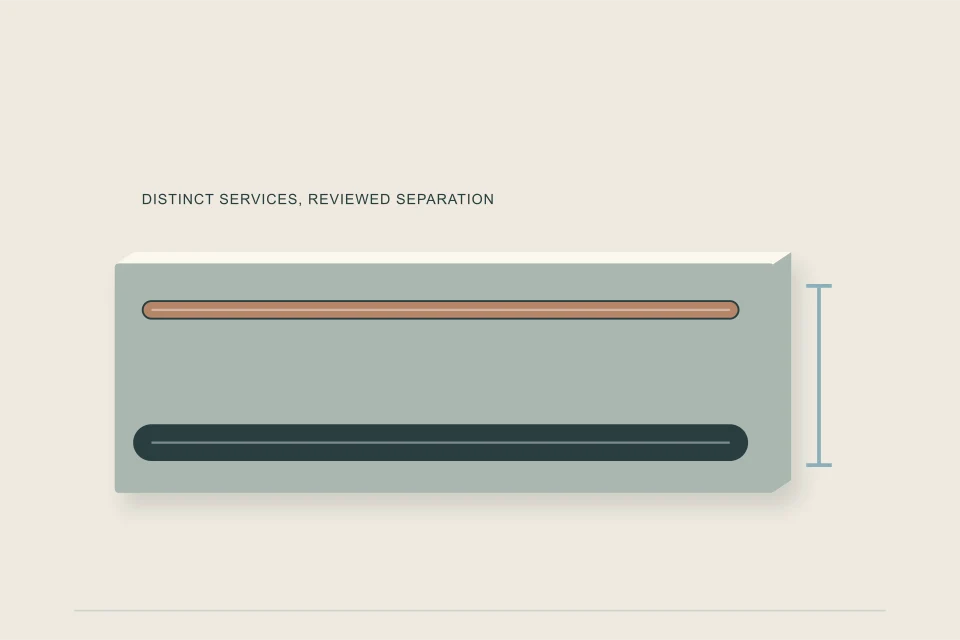
Halifax Water's 2025 Design Specifications set a minimum cover of 1.6 m for water services and 1.2 m for wastewater and storm services (as checked September 2026). Where water and sewer share a trench, the water line sets the trench depth, so budget for the deeper of the two.
06 /What should you ask Halifax Water and HRM before you design?
- Does my project go through an HRM building permit, the New Connection and Renewal Application, or Section 8?
- How old is my existing service, and does the 30-year replacement rule apply?
- Will a change of use trigger a sizing determination or hydraulic analysis?
- Can my backyard suite connect to the main dwelling lateral, and does the lateral have capacity?
- What regional development charge applies on the day I apply, given the freeze?
- Which plumbing code edition does HRM apply to the private drain?
Test your building and fixture mix in the service connection planner, then request private-side quotes once Halifax Water has confirmed the route.
FAQQuestions people ask
Who makes the tap for a new Halifax sewer service connection?
Halifax Water taps the main; the applicant pays for excavation and pipe from the main to the building. Tapping a 19 to 50 mm service is $375 (as checked September 2026).
Can a Halifax backyard suite share the main house sewer lateral?
HRM's 2020 staff report for Case 21162 describes backyard suites connecting to the main dwelling lateral, and the Design Specifications let an ancillary building on the same property share. Confirm lateral capacity first.
Does Halifax Water make me replace an old sewer service when I rebuild?
Yes, if the service is at least 30 years old and the project is a redevelopment or has a permit over $100,000. Replacement is at the owner's cost.
What regional development charge applies to a new secondary suite service in Halifax?
Halifax Water lists $2,103.71 for wastewater and $659.86 for water for a secondary suite, charged on net new units only (as checked September 2026).
Is there a Halifax grant for second unit water and sewer connection costs?
HRM's second unit incentive offers up to $10,000 toward water and sewer connection costs. Applications close October 11, 2026, and work must be complete by April 1, 2027.
How much cover does a Halifax wastewater service connection need?
At least 1.2 m for wastewater and storm services and 1.6 m for water, under Halifax Water's 2025 Design Specifications.